
Buyer Guide · 8 min read
The Guide to Soursop Bitters: Benefits, Dosing & How to Choose One That Actually Works
Twenty herbs, fourteen days of cold-brew, and one Caribbean tradition that finally crossed the ocean.
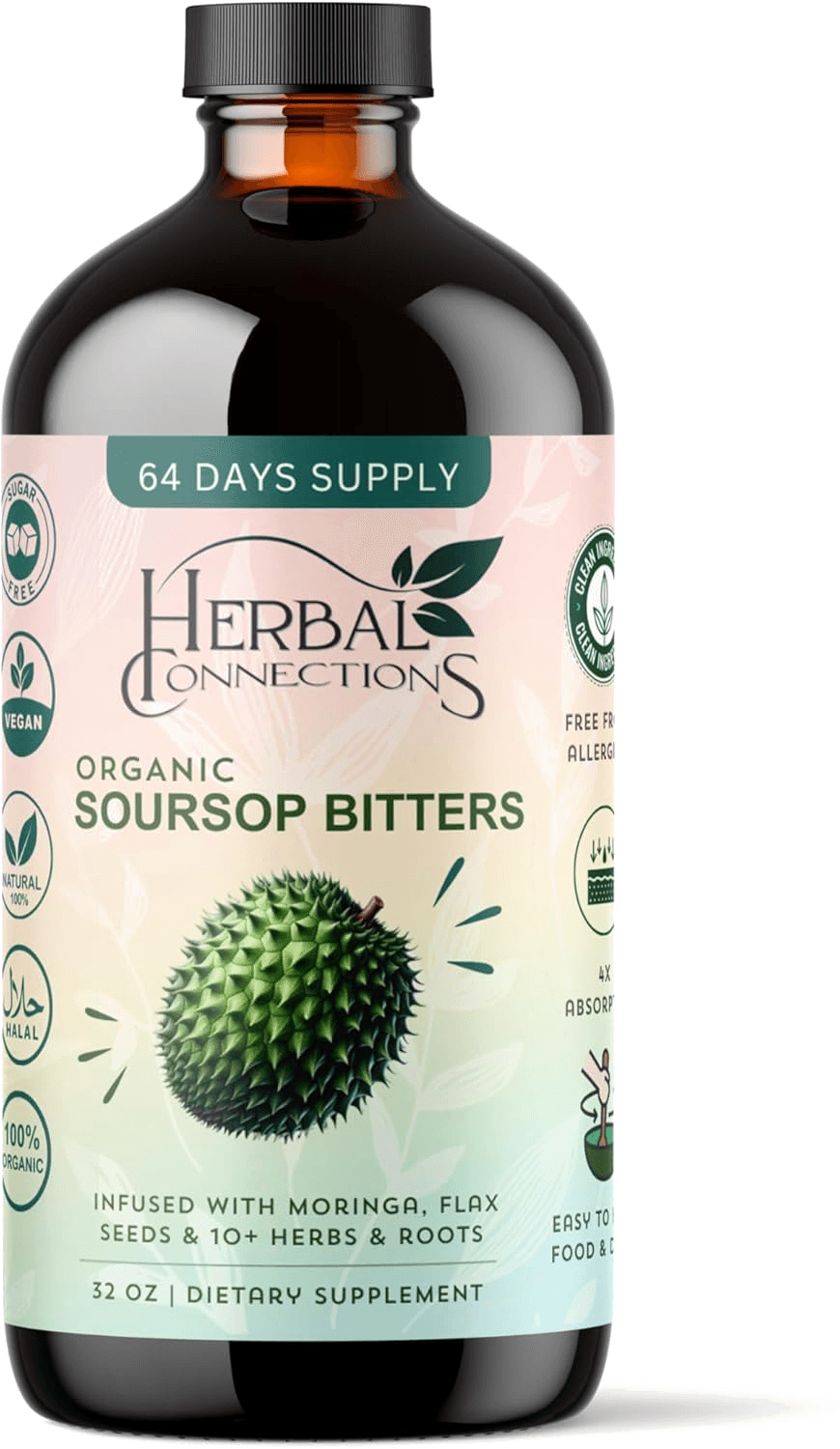
Soursop bitters are the Caribbean answer to gut and immune support — and they finally crossed the ocean. If you've ever heard your grandmother (or anyone's grandmother from Jamaica, Trinidad, or the Dominican Republic) talk about graviola, you've heard about soursop.
But "soursop bitters" has become one of the most-counterfeited categories in herbal supplements. The shelf is full of formulations that contain less than 2% actual soursop leaf, padded out with cane sugar, glycerin, and citric acid. This guide is here to fix that.
What is soursop?
Soursop is Annona muricata — a tree native to the Caribbean and northern South America that produces a spiky green fruit. The fruit is edible (it tastes like a pineapple-strawberry hybrid), but the medicinal action lives in the leaves.
For centuries, Caribbean and South American traditional herbalists have used soursop leaf tea for digestive complaints, sleep, and what they describe as "cooling" the system — a folk-medicine term roughly equivalent to lowering chronic low-grade inflammation. Recent ethnobotanical surveys back this up: in Jamaica's parish-by-parish surveys, soursop appears in the top five most-used medicinal plants in every region.
What does the research say?
Soursop leaf contains a class of compounds called acetogenins — most prominently annonacin and annohexocin. Lab studies on isolated cancer cell lines have shown selective cytotoxicity for these compounds, which is why you'll see breathless claims online about soursop "curing cancer." That research is real but it's in vitro (cells in a dish). We're nowhere near the clinical evidence required to claim treatment effects, and we don't make that claim.
The better-supported uses are humbler: soursop leaf tea has anti-inflammatory action documented in animal models, mild sedative effects (it's traditionally used as a sleep aid in the Caribbean), and antimicrobial action against several GI pathogens. The acetogenins also have well-documented effects on insulin sensitivity in diabetic rat models, with smaller human studies suggesting similar action in pre-diabetics.
How most "soursop bitters" cheat
Walk into any vitamin shop in 2026 and you'll see two dozen soursop bitters. Most of them are doing one or more of these things:
- Listing soursop first on the label but using less than 50 mg per serving. Effective doses in folk use are 1–3 grams of dried leaf, prepared as a tea. A 50 mg "soursop leaf extract" is functionally a flavor.
- Heat-extracting the herbs. Heat destroys the volatile oils and degrades acetogenins. The traditional preparation is cold-water infusion over many hours.
- Sweetening with cane sugar or glycerin. Bitters are supposed to taste bitter — that's how they trigger the digestive cascade. Sweetened bitters defeat their own mechanism.
- Adding 30+ "supporting herbs" at trace doses. This is a label-dressing technique. Real formulas pick 6–12 herbs at clinical doses; trace-dose 30-herb formulas mean nothing in any of the 30.
What to look for
A real soursop bitters formula will:
- List soursop leaf as the first or second ingredient with a weight per serving you can actually find (we use 1,500 mg of organic soursop leaf per 15 ml serving)
- Be cold-brewed — usually for 10–14 days in stainless or glass
- Contain no added sugar, glycerin, or alcohol (the bitter taste is the active mechanism)
- List every herb on the label with its weight — no "proprietary blend"
- Be in amber glass, not plastic (UV degrades acetogenins)
The other supporting herbs you want to see are the classics that pair well with soursop in Caribbean herbalism: moringa (for the chlorophyll and vitamin C), sea moss (for trace minerals), turmeric (for inflammation), ginger (for the GI tract), and cayenne (to enhance circulation). Our 20-herb formula includes all of those.
Dosing
The traditional Caribbean dose is 1 tablespoon (15 ml) once or twice daily, either straight or stirred into 4 oz of water. Most people prefer to mix it because the taste is genuinely bitter — that's not a bug, it's how bitters work. The bitter receptors on your tongue trigger gastrin secretion, which kicks off the entire digestive cascade. Sweetened bitters skip this step.
Start with one daily dose for the first two weeks. If you tolerate it well, you can move to twice daily. Most people see digestive changes (more regular bowel movements, less bloating after meals) within 7–14 days. Sleep effects, when they show up, usually appear in week 2–3.
Who should be careful
Soursop bitters aren't right for everyone:
- Pregnant or nursing women — soursop has uterotonic effects in animal models. Skip it.
- People on blood pressure medication — soursop can lower blood pressure. Talk to your doctor.
- People with Parkinson's disease — there's a small body of epidemiological research suggesting heavy long-term consumption of soursop (more than the traditional dose, over many years) may be associated with atypical parkinsonism in Caribbean populations. The data is contested, but if you have a family history, this isn't the supplement for you.
What we make
Our 32 oz Soursop Bitters is a 20-herb cold-brewed formula built around 1,500 mg of organic Jamaican soursop leaf per serving, paired with moringa, sea moss, turmeric, ginger, cayenne, and 14 supporting botanicals. Cold-brewed for 14 days. 64 servings per bottle. No sugar, no glycerin, no fillers. $38.95.
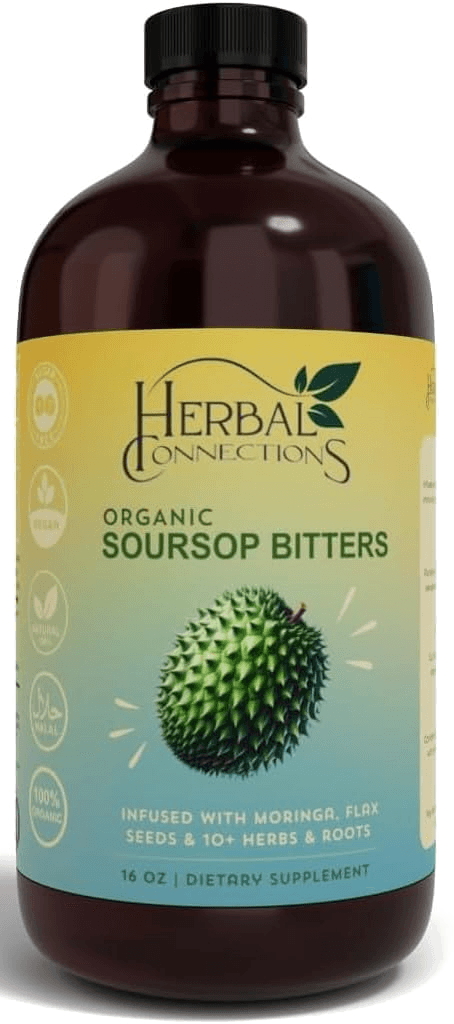
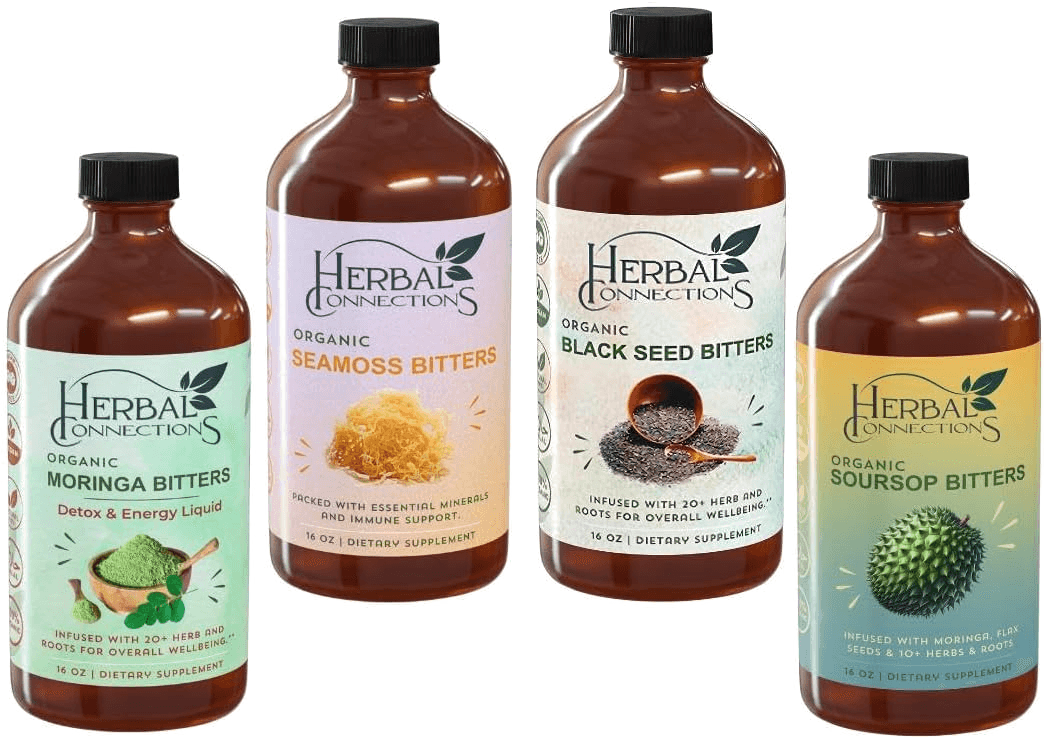
The 16 oz version is the same formula in a smaller bottle for first-time buyers. And the Four-Bitter Set bundles the soursop bitters with our black seed, sea moss, and moringa formulas at the best per-bottle price we offer.
Mentioned in this guide
Shop the formulas referenced above.
About the editorial team
Our editorial team is led by a Naturopathic Doctor (ND) and a clinical herbalist with 15+ years in functional medicine. Every post is reviewed before publishing.
The information in this article is for educational purposes only. It is not medical advice and is not intended to diagnose, treat, cure, or prevent any disease. Always consult a qualified healthcare practitioner before starting a new supplement, particularly if you are pregnant, nursing, taking medication, or have a chronic medical condition.