
Buyer Guide · 6 min read
Sea Moss: Is It Actually That Good?
Carrageen moss, Irish moss, Chondrus crispus — what 92 trace minerals can and can't do for you.
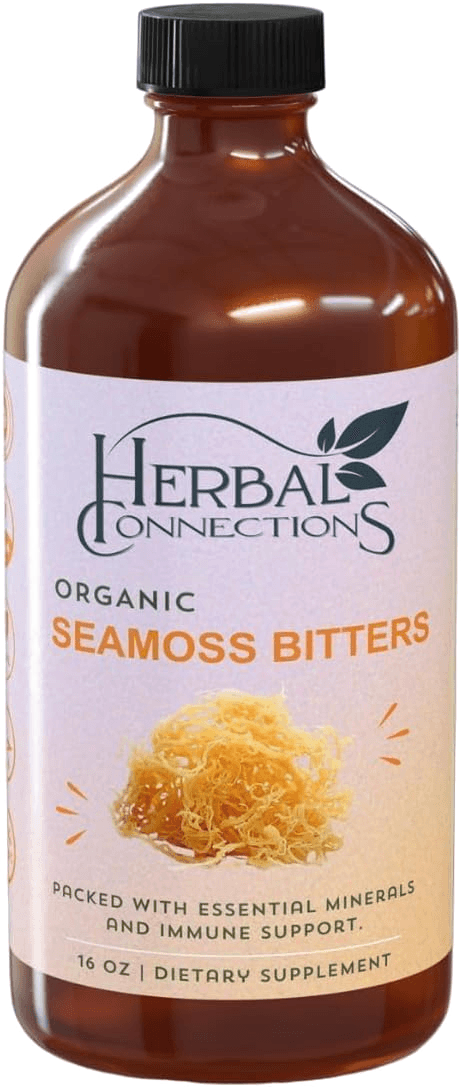
Sea moss is Chondrus crispus (or sometimes Genus gracilaria) — a marine algae that grows on rocky Atlantic and Caribbean coastlines. It's been used as a food, thickener, and folk medicine for centuries, particularly in Irish and Caribbean traditional cuisines. Then in 2020, a clip of Dr. Sebi (a controversial alkaline-diet practitioner) talking about sea moss went viral on TikTok, and sea moss went from grandmother's pantry to $40 wellness gel.
The mineral content claim — "92 of the 102 minerals the body needs" — is the headline that drives most of the sea moss market. It's also the claim most worth examining carefully.
What's actually in sea moss
The nutritional reality of sea moss:
- Iodine — high, sometimes very high. This is the most significant active component. A typical serving of dried sea moss contains 50-200 mcg of iodine. The RDA is 150 mcg. High-iodine sea moss can be a problem if you have thyroid issues — see "Who should be careful" below.
- Magnesium, potassium, calcium, iron — present but in modest amounts. You'd need to eat substantial quantities to hit RDA levels from sea moss alone.
- Trace minerals (selenium, zinc, copper, boron, etc.) — present in trace amounts. The "92 minerals" claim is technically true but mathematically deceptive — many are at parts-per-billion levels.
- Carrageenan — the polysaccharide that gives sea moss its gel-forming property. This is what's used commercially as a food thickener.
- Soluble fiber — about 3 g per 100 g of dried sea moss. Acts as a prebiotic.
The "92 minerals = miracle food" framing is more marketing than science. The minerals are real, but you can get all of them from a varied diet without paying $40 for a 16 oz jar.
What sea moss actually does, supported by evidence
Iodine for thyroid (real, but careful)
For people with mild iodine deficiency, sea moss can be a useful dietary source of iodine. Iodine is critical for thyroid hormone production. The catch: in industrialized countries, most people get enough iodine from iodized salt and seafood, and excess iodine can cause thyroid problems.
Prebiotic fiber
The polysaccharides in sea moss (particularly λ-carrageenan and ι-carrageenan) act as prebiotics in the gut. Small clinical trials have shown modest improvements in stool consistency and gut microbial diversity with regular consumption.
Skin and mucus membrane support
Topical and oral sea moss have been used traditionally for respiratory mucus and skin conditions. The evidence is mostly traditional and animal-model; modern clinical evidence is limited.
Mineral repletion in deficient populations
For populations with genuinely poor mineral intake — particularly women with heavy menstrual losses — sea moss can be a useful adjunct. For most people on a varied diet, the marginal mineral benefit is small.
What sea moss probably doesn't do
The viral claims that don't have supporting evidence:
- "Boosts immunity" — overused phrase, not specifically supported for sea moss
- "Detoxifies" — meaningless claim; your liver and kidneys do this
- "Anti-aging" — no specific evidence
- "Cures STDs" — circulating claim with no scientific basis whatsoever
Who should be careful
- People with hyperthyroidism (overactive thyroid) — the iodine load can worsen the condition
- People with Hashimoto's or other autoimmune thyroid conditions — iodine can trigger flares
- Anyone on thyroid medication — coordinate with your endocrinologist
- Pregnant women — iodine needs increase, but excess iodine is also problematic; talk to your OB
- People allergic to seafood — cross-reactivity is possible
How to take it
Three formats, in order of accessibility:
1. Dried whole sea moss — soak in water for 12-24 hours, blend with water to make sea moss gel. Cheapest, most authentic, requires effort. About $15-25 for a bag that makes ~3-4 weeks of gel.
2. Pre-made sea moss gel — what most people are buying at $30-40 per 16 oz jar. Convenient but you're paying largely for water and labor.
3. Sea moss in a bitters or tonic format — what we make. Sea moss combined with supporting herbs in a cold-brewed liquid that delivers a standardized iodine and mineral dose per serving.
The typical daily dose is 1-2 tablespoons of sea moss gel, or 1 tablespoon of a sea moss bitters tonic.
What we make
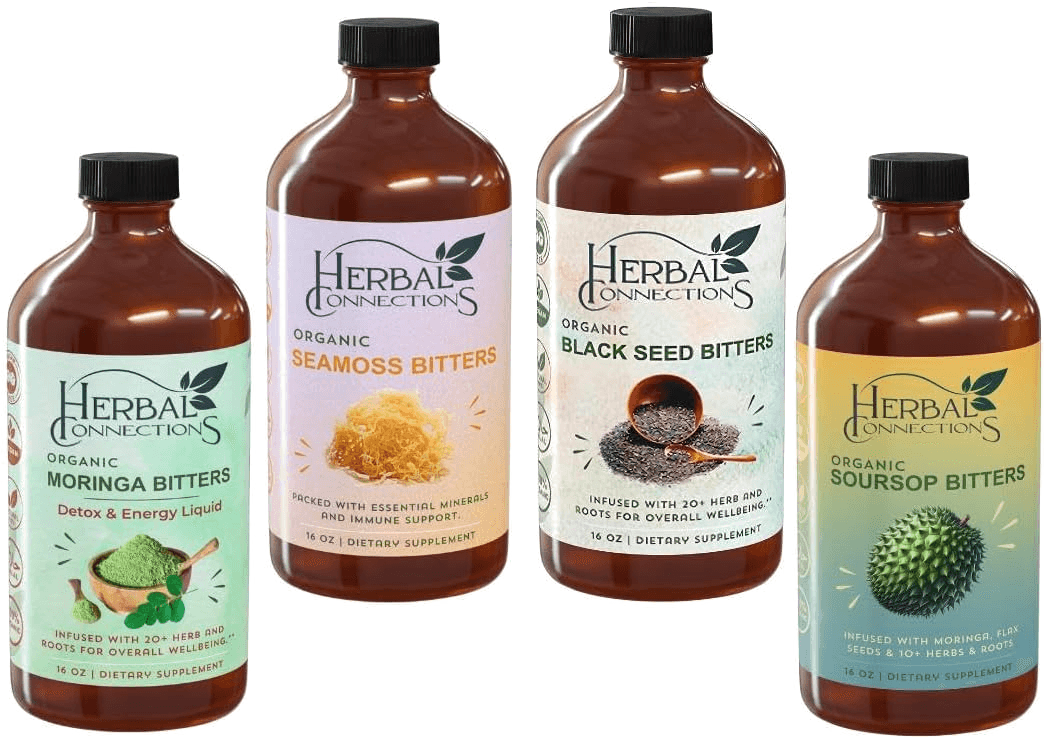
Our Sea Moss Bitters is a 16 oz cold-brewed tonic built around wildcrafted St. Lucia sea moss (the source the Caribbean tradition uses), paired with other mineral-rich herbs and cold-pressed liquid extracts. 32 servings per bottle. $29.96.
It's part of the Four-Bitter Set alongside our Soursop, Black Seed, and Moringa formulas — that's the rotation our long-term customers settle into.
Mentioned in this guide
Shop the formulas referenced above.
About the editorial team
Our editorial team is led by a Naturopathic Doctor (ND) and a clinical herbalist with 15+ years in functional medicine. Every post is reviewed before publishing.
The information in this article is for educational purposes only. It is not medical advice and is not intended to diagnose, treat, cure, or prevent any disease. Always consult a qualified healthcare practitioner before starting a new supplement, particularly if you are pregnant, nursing, taking medication, or have a chronic medical condition.