
Herbalism · 7 min read
Master Tonic vs Fire Cider: A 100-Year-Old Recipe, Reborn
Raw apple cider vinegar, six botanicals, fourteen days. Why this folk recipe is still the best $1.50-a-serving immune support you can buy.
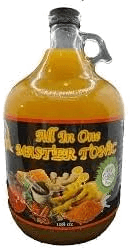
If you walk into the office of an old-school herbalist or naturopath in November, there's a decent chance they'll offer you a shot of something dark amber, vinegar-sharp, and very hot. That's master tonic — also called fire cider, though the names have a slightly contested history.
The basic recipe has been around for at least a century in American herbalism, popularized in its modern form by herbalist Rosemary Gladstar in the 1970s. The recipe is almost embarrassingly simple. The pharmacology, on the other hand, has held up remarkably well under modern scrutiny.
The recipe
A traditional master tonic has six ingredients, all macerated in raw apple cider vinegar (with the mother) for four to six weeks:
- Garlic — broad-spectrum antimicrobial; allicin is the active compound
- Onion — quercetin source, plus sulfur compounds that synergize with garlic
- Horseradish — contains glucosinolates that break down into isothiocyanates (the same class of compound that gives wasabi its kick); cleared by clinical research for sinus and respiratory support
- Ginger root — anti-inflammatory; warming; circulatory stimulant
- Turmeric root — curcumin; anti-inflammatory; pairs with the cayenne for bioavailability
- Cayenne pepper — circulatory stimulant; capsaicin enhances absorption of the other actives
That's it. Six herbs, one carrier (raw ACV with the mother), six weeks. The traditional ratio is roughly equal parts of each, but our formula leans more heavily on garlic and ginger because the modern evidence for those two is the strongest.
Why the vinegar matters
The carrier isn't decorative. Raw apple cider vinegar with the mother (the cellulose-based bacterial culture floating in the bottle) is doing several things:
- Acid extraction — vinegar pulls polyphenols and certain alkaloids out of plant material that water can't reach
- Preservation — the acidic pH stabilizes the actives indefinitely
- The mother itself — contains acetobacter, a probiotic strain shown to modulate gut microbiome
- Acetic acid — has its own documented effects on blood sugar response when consumed before meals
This is why we don't use distilled vinegar, white vinegar, or pasteurized ACV. The "mother" is the active part.
What the science actually says
The whole-formula clinical evidence on master tonic specifically is limited — most studies look at the individual ingredients. But the individual evidence is strong:
- Garlic for immune support: Multiple meta-analyses show garlic supplementation reduces cold incidence and duration. Effect sizes are modest (~25% reduction in cold duration in some trials) but consistent.
- Quercetin (from onion): One of the better-studied flavonoids; reduces seasonal allergy symptoms in controlled trials.
- Horseradish isothiocyanates: Studied head-to-head against pharmaceutical sinus medications in German clinical trials, with comparable results for acute sinusitis.
- Ginger: Anti-inflammatory effects on par with NSAIDs in mild conditions; well-tolerated.
- Curcumin (turmeric): One of the most-studied anti-inflammatory compounds in modern phytomedicine.
In sum: the master tonic recipe is not one of those folk remedies that the modern evidence demolishes. It's one where the evidence quietly validates the tradition.
How to take it
The traditional dose is 1 tablespoon (15 ml) once or twice daily during cold and flu season (October through March in most of the US), or as a daily preventative if you live in a high-exposure environment (teachers, healthcare workers, parents of young kids).
Take it straight if you can handle it. Most people stir it into 4 oz of water, or follow it with a sip of orange juice. Some practitioners recommend taking it under the tongue for faster absorption — that's optional and intense.
A 32 oz bottle is about a one-month supply at 1 tablespoon daily, or two months at 1 tablespoon every other day.
Who should be careful
- People on blood thinners — garlic has mild antiplatelet activity. Talk to your doctor.
- People with active GERD or peptic ulcers — the cayenne and vinegar will aggravate this. Skip it.
- Pregnant women — usually fine in food amounts but the concentrated formula isn't well-studied. Talk to your OB.
What we make
Our master tonic is a six-botanical formula with raw, unfiltered Bragg-style apple cider vinegar, organic garlic, organic onion, fresh horseradish root, organic ginger, organic turmeric, and cayenne pepper. Macerated for 14 days (the modern accelerated process — traditional 6-week macerations give marginal additional extraction).
Three sizes:
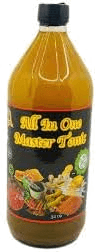
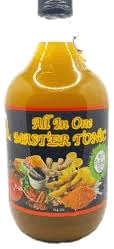
- 32 oz — $44.94, ~32 servings, one-month supply for one person
- 64 oz — $72.97, ~64 servings, two-month supply or a household
- 128 oz / full gallon — $99.99, ~128 servings, best value per serving
The gallon is the practitioner size — what naturopaths and herbalists keep on the office shelf. If you're going to commit to daily use, the gallon brings the per-serving cost down to about $0.78.
Mentioned in this guide
Shop the formulas referenced above.
About the editorial team
Our editorial team is led by a Naturopathic Doctor (ND) and a clinical herbalist with 15+ years in functional medicine. Every post is reviewed before publishing.
The information in this article is for educational purposes only. It is not medical advice and is not intended to diagnose, treat, cure, or prevent any disease. Always consult a qualified healthcare practitioner before starting a new supplement, particularly if you are pregnant, nursing, taking medication, or have a chronic medical condition.