
Buyer Guide · 7 min read
Magnesium Forms Compared: Glycinate, Threonate, Citrate, Oxide, Malate
Five forms of the same mineral, five different jobs. A practitioner's complete guide to picking the right one.
If you've spent any time looking at magnesium supplements, you've noticed there are at least six different forms on the shelf — glycinate, threonate, citrate, malate, oxide, taurate — and the marketing for each makes them sound interchangeable.
They're not. Each form has a different absorption rate, a different target tissue, and a different set of effects. This is the comprehensive practitioner's guide.
Why magnesium is positively charged (and why that matters)
Magnesium is a divalent cation — a positively charged mineral ion. To get into your body, it has to be chelated — bound to a negatively-charged carrier molecule that lets it cross your gut wall. The carrier is the second half of each magnesium form's name:
- Magnesium oxide → bound to oxygen
- Magnesium citrate → bound to citric acid
- Magnesium glycinate → bound to the amino acid glycine
- Magnesium L-threonate → bound to L-threonate (a sugar acid)
- Magnesium malate → bound to malic acid
- Magnesium taurate → bound to taurine
The carrier determines:
- Absorption rate — what fraction crosses your gut wall
- Target tissue — where in the body the magnesium ends up
- Side effects — GI tolerance varies enormously
Form-by-form breakdown
Magnesium Glycinate
Best for: sleep, anxiety, muscle relaxation, daily general use
Absorption: Excellent (~80%). The glycine carrier is actively absorbed by your gut.
Side effects: Minimal. Glycine has a mild calming effect of its own, which compounds the magnesium's relaxation effect.
Notes: This is the practitioner's default for daily magnesium supplementation. Cheap, well-tolerated, broadly effective. The only thing it's not the best at is brain-specific cognitive support — see threonate below.
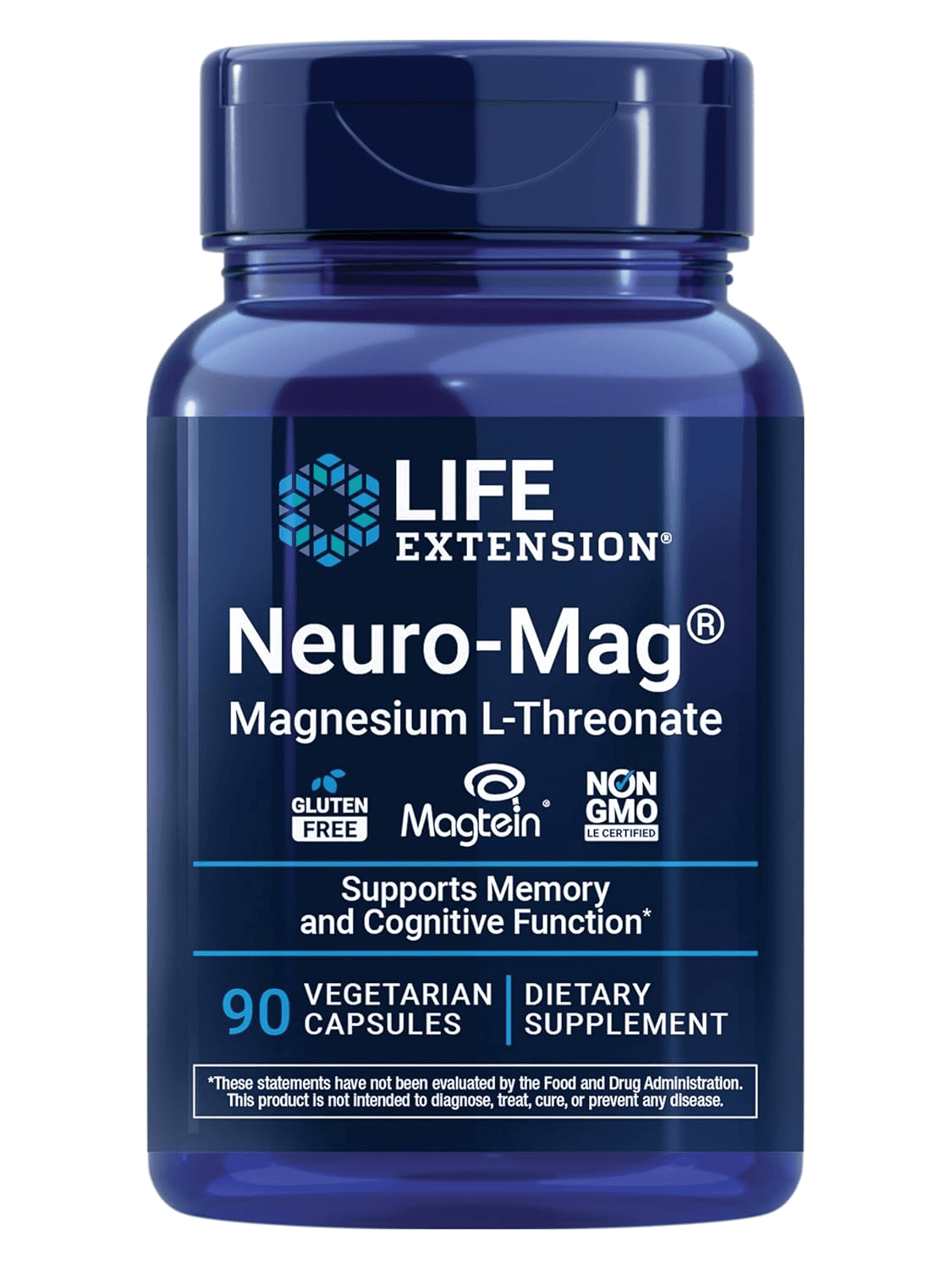
Magnesium L-Threonate (Magtein®)
Best for: cognition, memory, sleep with a brain-fog component
Absorption: Moderate (~30%), but uniquely crosses the blood-brain barrier. This is the only form clinically demonstrated to raise magnesium levels in the brain.
Side effects: Minimal. Slightly higher cost.
Notes: The MIT-developed form. Multiple trials show improvements in working memory and executive function. Particularly useful if your goal is sleep + cognitive support, or if you're 40+ and noticing early cognitive changes.
Magnesium Citrate
Best for: constipation, muscle cramps, daily general use
Absorption: Good (~50%). Citrate is well-recognized by absorption pathways.
Side effects: Mildly laxative — which is sometimes a feature, sometimes a bug.
Notes: The standard "general purpose" magnesium. Cheaper than glycinate, slightly more laxative. The citrate form also has a mild alkalizing effect on urine pH that can be useful for kidney-stone prevention.
Magnesium Malate
Best for: fibromyalgia, chronic fatigue, muscle pain
Absorption: Good (~60%). Malic acid is well-absorbed.
Side effects: Minimal.
Notes: Malic acid is involved in the Krebs cycle (mitochondrial energy production), and the form has been specifically studied in fibromyalgia patients with modest positive results. The energy effect is subtle but real.
Magnesium Oxide
Best for: acute constipation, cost-conscious general supplementation
Absorption: Poor (~4%). The vast majority is excreted unabsorbed.
Side effects: Strongly laxative.
Notes: The cheapest form. Most "300 mg of magnesium" bottles at the pharmacy are magnesium oxide. Effective for constipation (the unabsorbed magnesium pulls water into the colon), poor for everything else. If you see a budget magnesium claiming a high dose, it's usually oxide.
Magnesium Taurate
Best for: cardiovascular support, blood pressure, heart rhythm
Absorption: Good (~60%).
Side effects: Minimal.
Notes: Taurine is an amino acid with its own cardiovascular benefits. The combination is specifically studied in hypertension and arrhythmia management. Less common on US shelves than the other forms.
What to pick for what
| Goal | First choice | Second choice | |---|---|---| | Sleep | Glycinate or L-threonate | Citrate | | Anxiety, racing thoughts | Glycinate | L-threonate | | Cognition, memory | L-threonate | Glycinate | | Muscle cramps | Glycinate | Citrate | | Constipation | Citrate or oxide | Glycinate | | Daily general use | Glycinate | Citrate | | Athletic performance | Malate | Glycinate | | Cardiovascular support | Taurate | Glycinate | | Bone health (with calcium) | Citrate | Glycinate |
The "magnesium complex" question
Some products combine multiple forms — magnesium oxide + citrate + glycinate, for example. The pitch is that you get multiple absorption pathways and multiple tissue targets in one capsule.
Is this useful? Sometimes. It's a reasonable approach for general-purpose supplementation. But if your goal is specific (sleep, cognition, constipation), a single-form product targeted at your goal is more efficient.
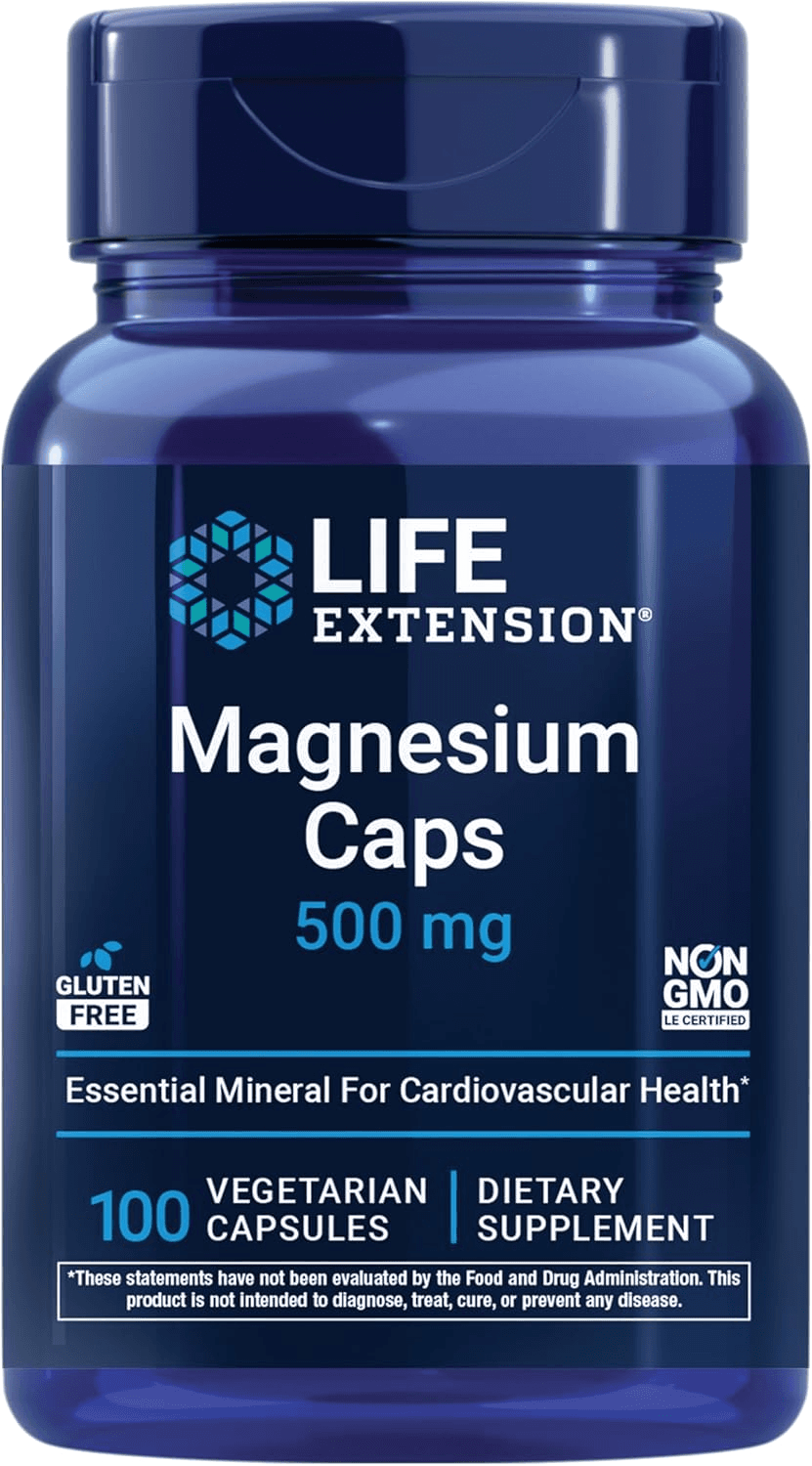
Life Extension's Magnesium Caps is the multi-form approach (oxide + citrate + succinate, 500 mg per capsule, $11.99 for 100 days). Good general daily magnesium. For sleep specifically, switch to L-threonate.
Dosing
The RDA for magnesium is 310-420 mg/day depending on age and sex. Most people fall short by 100-150 mg.
For supplementation:
- Daily general use: 300-400 mg of elemental magnesium (from any well-absorbed form)
- Sleep-specific: 144 mg of magnesium L-threonate, taken 60-90 minutes before bed
- Constipation: start with 400 mg of citrate or oxide, adjust to tolerance
Excess magnesium (over ~600 mg in well-absorbed forms) typically causes loose stools — that's your tolerance ceiling and a useful self-titration mechanism.
What we carry
- Life Extension Neuro-Mag (Magtein® L-Threonate) — for sleep and cognition. $39.99, 30 servings.
- Life Extension Magnesium Caps — three-form daily (oxide + citrate + succinate). $11.99, 100 capsules.
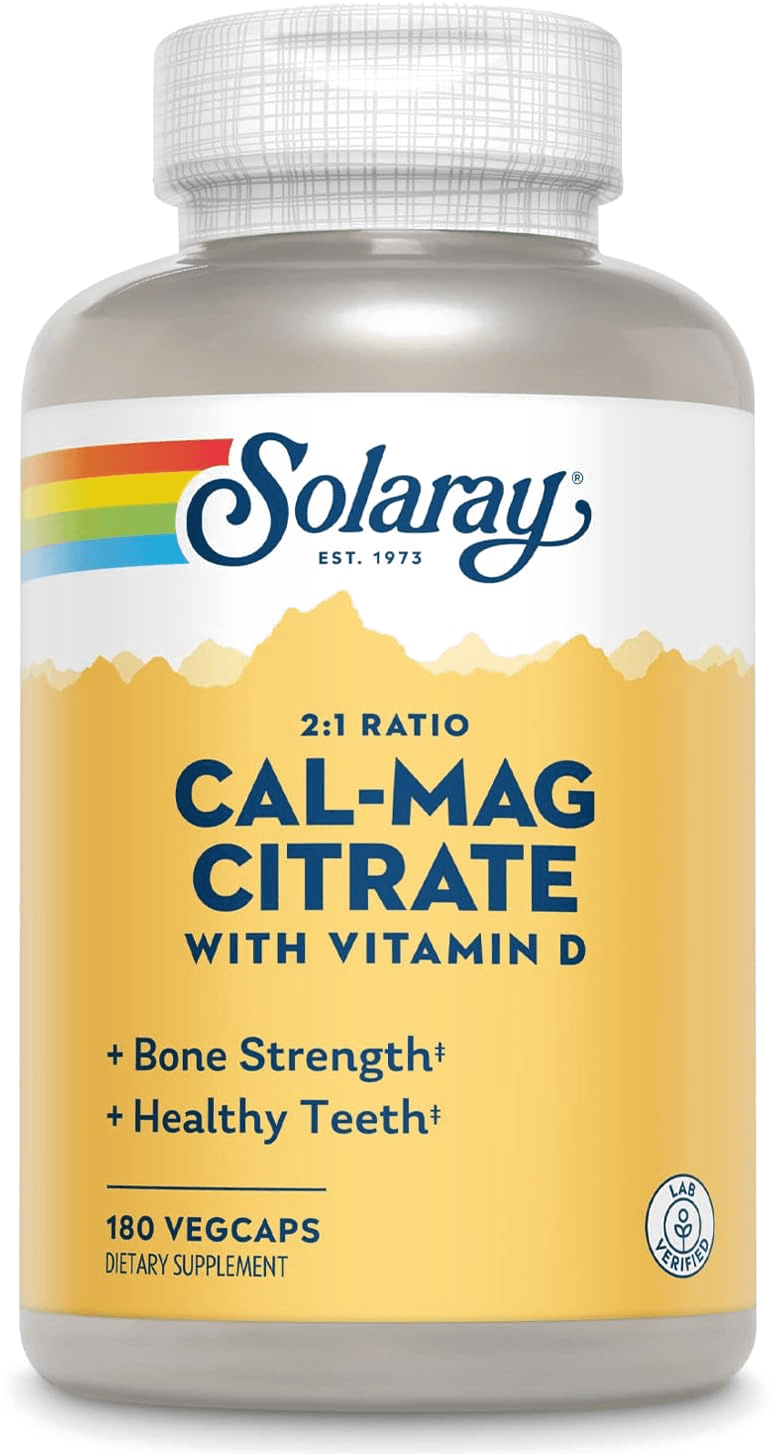
- Solaray Cal-Mag Citrate 2:1 with D3 — for bone health with calcium paired in. $20.10, 180 capsules.
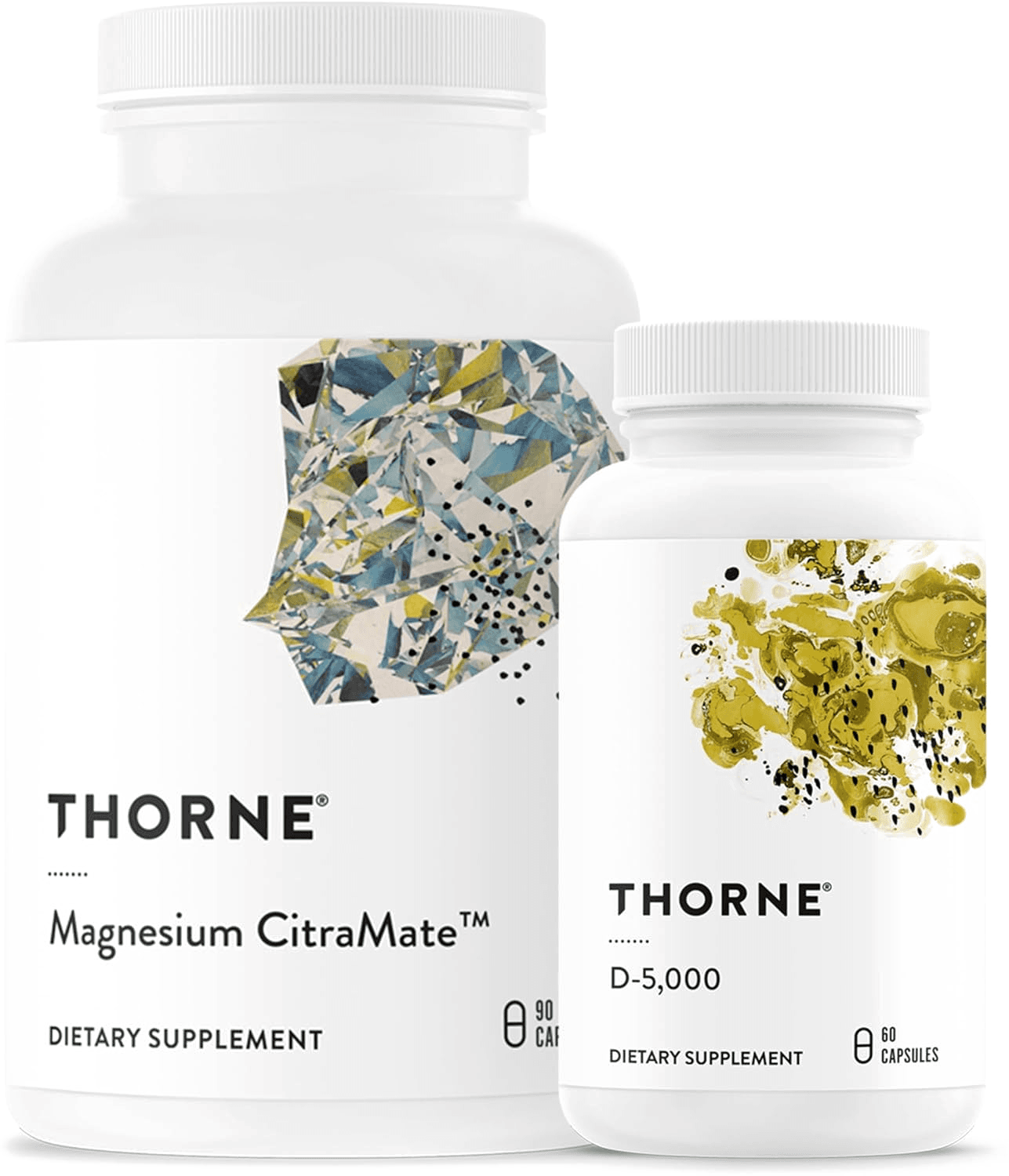
- Thorne Magnesium CitraMate + D-5000 Bundle — practitioner-grade citrate-malate, paired with vitamin D3. $42, 60-90 servings.
Mentioned in this guide
Shop the formulas referenced above.
About the editorial team
Our editorial team is led by a Naturopathic Doctor (ND) and a clinical herbalist with 15+ years in functional medicine. Every post is reviewed before publishing.
The information in this article is for educational purposes only. It is not medical advice and is not intended to diagnose, treat, cure, or prevent any disease. Always consult a qualified healthcare practitioner before starting a new supplement, particularly if you are pregnant, nursing, taking medication, or have a chronic medical condition.