
Buyer Guide · 8 min read
Collagen Peptides 101: Types 1, 2, and 3 — and Why Most Brands Get It Wrong
Hydrolyzed bovine, marine, multi-collagen — what the labels mean, what the research supports, and how to actually take it.
Collagen went from health-food-store oddity in 2015 to the bestselling supplement on Amazon by 2023. Somewhere along the way, the marketing got ahead of the actual science — and the average consumer is now picking between a dozen "multi-collagen complex" tubs without much idea what they're actually buying.
This is a tour of what collagen actually is, what types matter, and how to take it in a way that's supported by the clinical evidence.
What is collagen?
Collagen is a structural protein — by mass, the most abundant protein in your body. It makes up about 30% of total body protein and is the primary structural component of skin, tendons, ligaments, cartilage, bone matrix, and blood vessel walls.
There are 28 known types of collagen. For supplementation purposes, three matter:
- Type I — skin, tendons, bones (about 90% of body collagen)
- Type II — cartilage (joints)
- Type III — skin and blood vessels, often paired with Type I
The peptide supplements you take orally are hydrolyzed (broken down into smaller chains) versions of these. The hydrolysis is what makes them absorbable — intact collagen is too large a molecule to pass through your gut wall.
What the research actually supports
The clinical evidence on collagen supplementation has gotten substantially stronger over the last decade. The strongest areas:
Skin elasticity and hydration (well-supported)
Multiple double-blind placebo-controlled trials show measurable improvements in skin elasticity, hydration, and wrinkle depth after 8–12 weeks of daily collagen peptide supplementation. Effect sizes are real but modest — about a 15–20% improvement in elasticity in the better-controlled trials.
The mechanism appears to involve fragments of collagen peptides being recognized by fibroblasts (skin cells) as signaling molecules, triggering increased endogenous collagen production.
Joint comfort (moderately supported)
A series of trials in osteoarthritis patients have shown that hydrolyzed Type II collagen reduces joint pain and improves function over 24-week trial periods. The effect size is comparable to over-the-counter NSAIDs in the best trials, with a much better side-effect profile.
Bone density (emerging)
Longer-duration trials (12+ months) have shown small but statistically significant improvements in bone mineral density in postmenopausal women taking collagen peptides. The effect is additive to calcium and vitamin D supplementation.
Tendon and ligament recovery (athletic context)
Smaller trials in athletes have shown faster tendon recovery and reduced injury rates with collagen + vitamin C taken before exercise. The "+ vitamin C" detail matters — vitamin C is a required cofactor for collagen synthesis.
What's overstated
A few things you'll see in collagen marketing that the evidence doesn't really support:
- "Builds muscle" — collagen is an incomplete protein (low in essential amino acids). It's not a substitute for whey, soy, or pea protein for muscle synthesis.
- "Burns fat" — no evidence base
- "Detoxifies" — meaningless; the liver does this
- "Improves hair growth" — minor evidence in some trials, but generally less robust than skin/joint claims
Bovine vs marine vs multi-collagen
Three sourcing options dominate the market:
Bovine (grass-fed beef hide)
The most common source. Delivers Type 1 and 3 collagen primarily. Cost-effective, well-studied, neutral taste. About 90% of collagen supplements sold in the US are bovine. Look for grass-fed sourcing — pastured cattle have a meaningfully better fatty acid profile in their connective tissue.
Marine (fish skin)
Made from fish skin and scales — usually wild-caught Pacific cod or farmed tilapia. Primarily Type 1. Slightly smaller peptide size (~3,000 Daltons vs ~5,000 for bovine), which some research suggests improves absorption. Costs about 2x bovine. Pescatarian-friendly.
Multi-collagen complex
Blends bovine, marine, chicken (Type 2), and eggshell membrane sources. The marketing pitch is that you get Types 1, 2, 3, 5, and 10 in one scoop. The actual evidence that multi-collagen outperforms single-source is thin.
For most people: grass-fed bovine collagen with vitamin C is the sweet spot of evidence, cost, and effect.
How to take it
The dose with the strongest evidence base is 10–20 grams of hydrolyzed collagen peptides daily. Most quality powders deliver 18–20 g per scoop. Capsules and tablets are convenient but you'd need to take 10–15 of them to hit the effective dose — which is why most serious collagen users go with powder.
Take it with vitamin C — either built into the formula or eaten alongside (citrus, berries, peppers). Vitamin C is required for the body to synthesize collagen from the amino acids you absorb. Without it, you're providing the materials but not the catalyst.
Time of day doesn't matter much for collagen alone. For athletic recovery, the research suggests taking it 30–60 minutes before exercise.
Effects timeline:
- Joint comfort: 4–8 weeks
- Skin elasticity: 8–12 weeks
- Hair/nail strength: 8–16 weeks (slower because of growth cycle)
- Bone density: 6–12+ months
What a clean label looks like
A good collagen product will:
- List the source clearly (e.g., "grass-fed bovine hide", "wild-caught marine")
- Specify the peptide size in Daltons (lower is better absorbed)
- Deliver 18–20 g per serving in powder form
- Be unflavored (you can add your own; flavored versions are usually sweetened)
- Optionally include vitamin C and biotin — both are useful cofactors
Things to avoid:
- "Proprietary blends" without per-source weights
- Heavy sweeteners (especially monk fruit + erythritol — there's emerging evidence this combination affects glucose response)
- "Multi-collagen" formulas where most types are at trace doses
What we carry
We stock the NeoCell line, which is the brand that brought collagen peptides to the US retail market in 1998. The two products that cover most use cases:
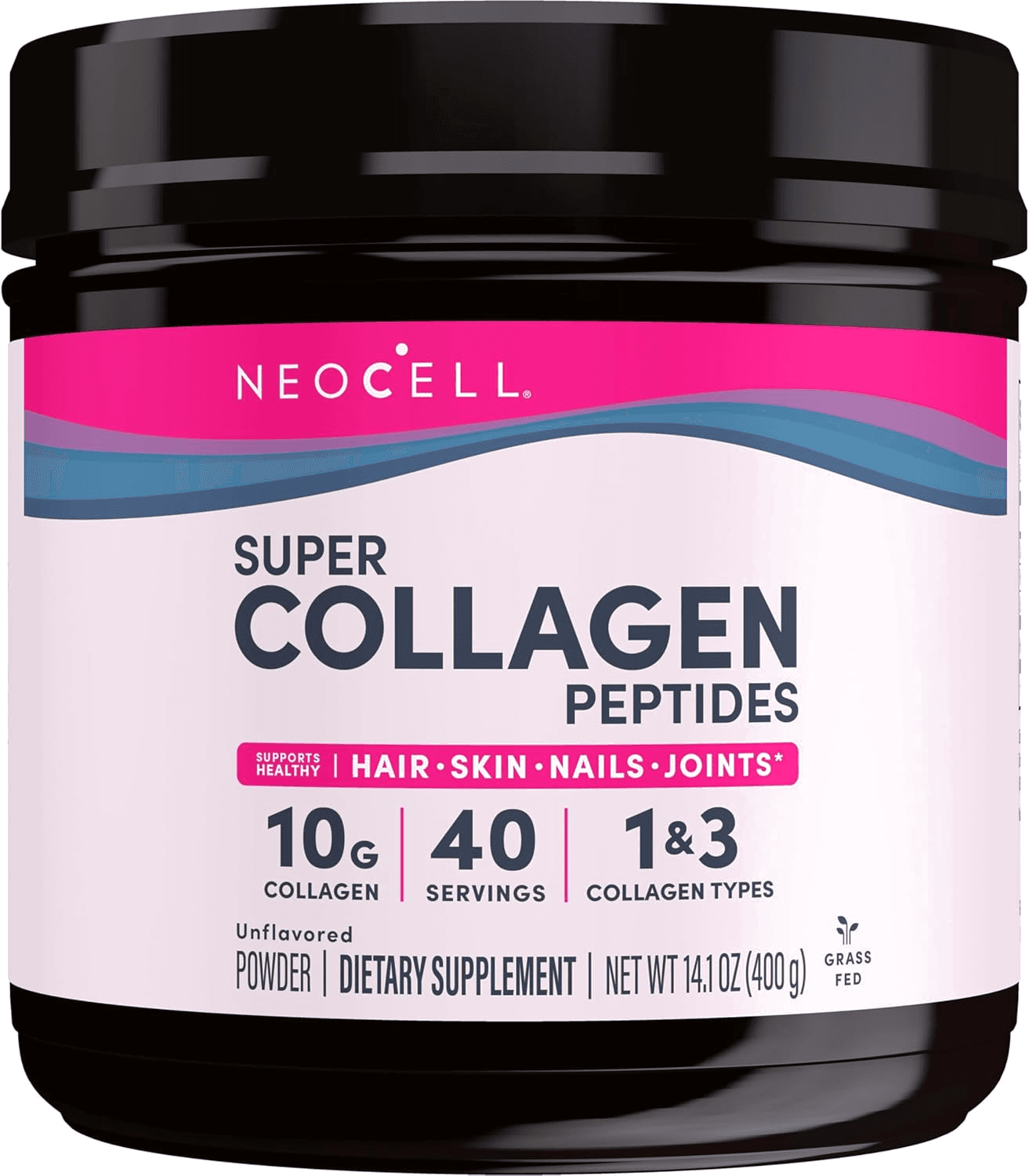
- Super Collagen Peptides 21.2 oz — grass-fed bovine Type 1 & 3, unflavored, 19 g per scoop. The original — 33,000+ five-star reviews on Amazon. $29.99.
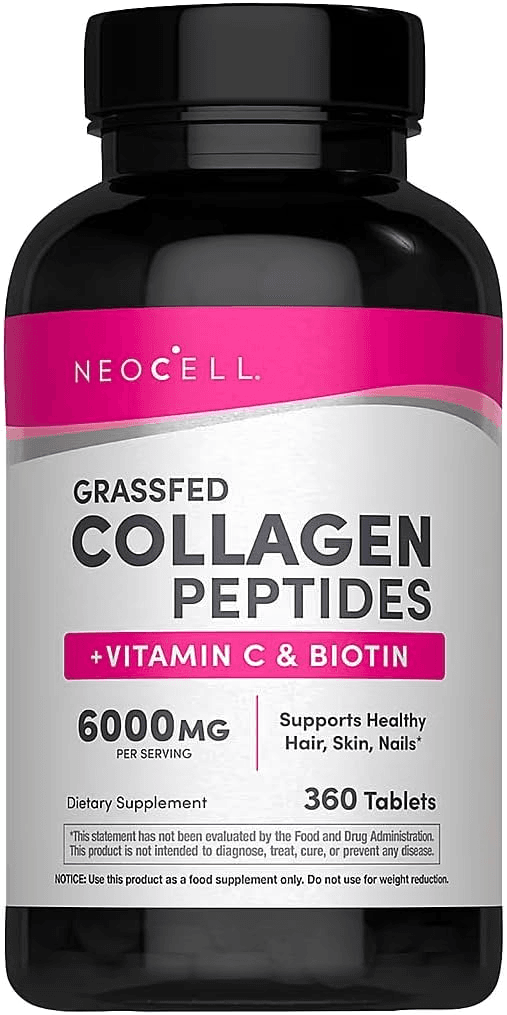
- Super Collagen + C (360 tablets) — same Type 1 & 3 bovine collagen in tablet form, with vitamin C built in. For people who don't want to mix powder. $22.39.
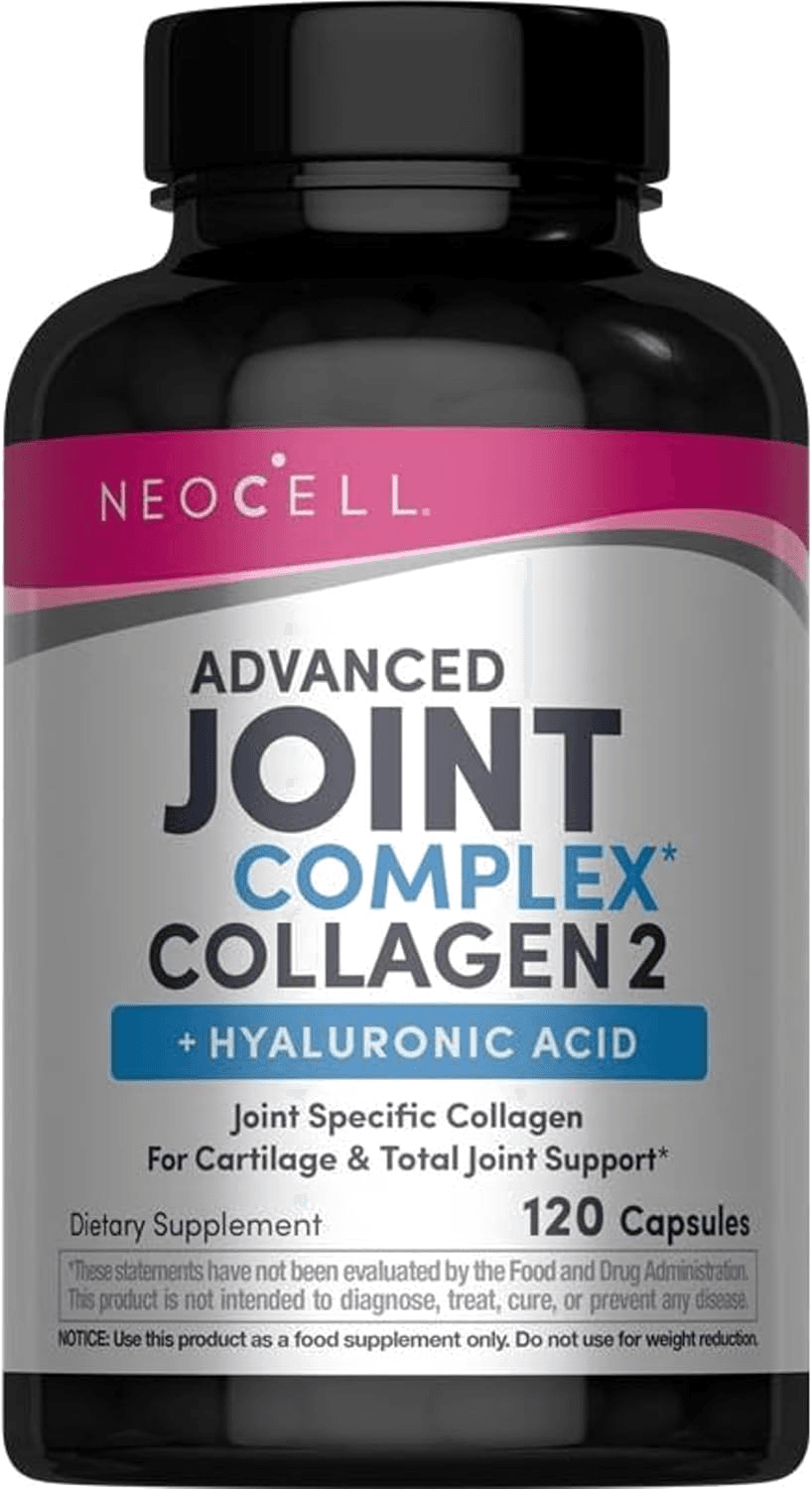
For joint-specific support (Type II), the NeoCell Joint Complex combines Type 2 chicken-source collagen with hyaluronic acid. That's the formulation closest to the clinical literature on osteoarthritis.
About the editorial team
Our editorial team is led by a Naturopathic Doctor (ND) and a clinical herbalist with 15+ years in functional medicine. Every post is reviewed before publishing.
The information in this article is for educational purposes only. It is not medical advice and is not intended to diagnose, treat, cure, or prevent any disease. Always consult a qualified healthcare practitioner before starting a new supplement, particularly if you are pregnant, nursing, taking medication, or have a chronic medical condition.