
Science · 10 min read
Black Seed (Nigella sativa): What 1,400 Years of Use and 4,000 Modern Studies Actually Tell Us
From the Prophet's medicine cabinet to PubMed — a careful look at one of the most-studied herbs in modern science.
Nigella sativa — black seed, black cumin, kalonji, habba sawda — has one of the longest continuous medicinal uses of any plant in human history. It's been found in Tutankhamun's tomb. The Greek physician Dioscorides described its uses in the 1st century. The hadith of Bukhari refers to it as a remedy for "every disease except death." Avicenna's Canon of Medicine devotes pages to it.
But the historical record is one thing — what does the modern evidence actually say? Black seed is one of the most-studied medicinal plants of the last fifty years. PubMed indexes over 4,000 papers on Nigella sativa and its primary active compound, thymoquinone.
This post is a tour of what holds up, what's interesting but unproven, and what's overstated.
What is black seed?
Black seed is the seed of Nigella sativa, an annual flowering plant in the buttercup family, native to a band stretching from the eastern Mediterranean through South Asia. The seeds are small, black, and triangular. They have a sharp, peppery flavor — historically used as a spice in Indian, Middle Eastern, and North African cuisine.
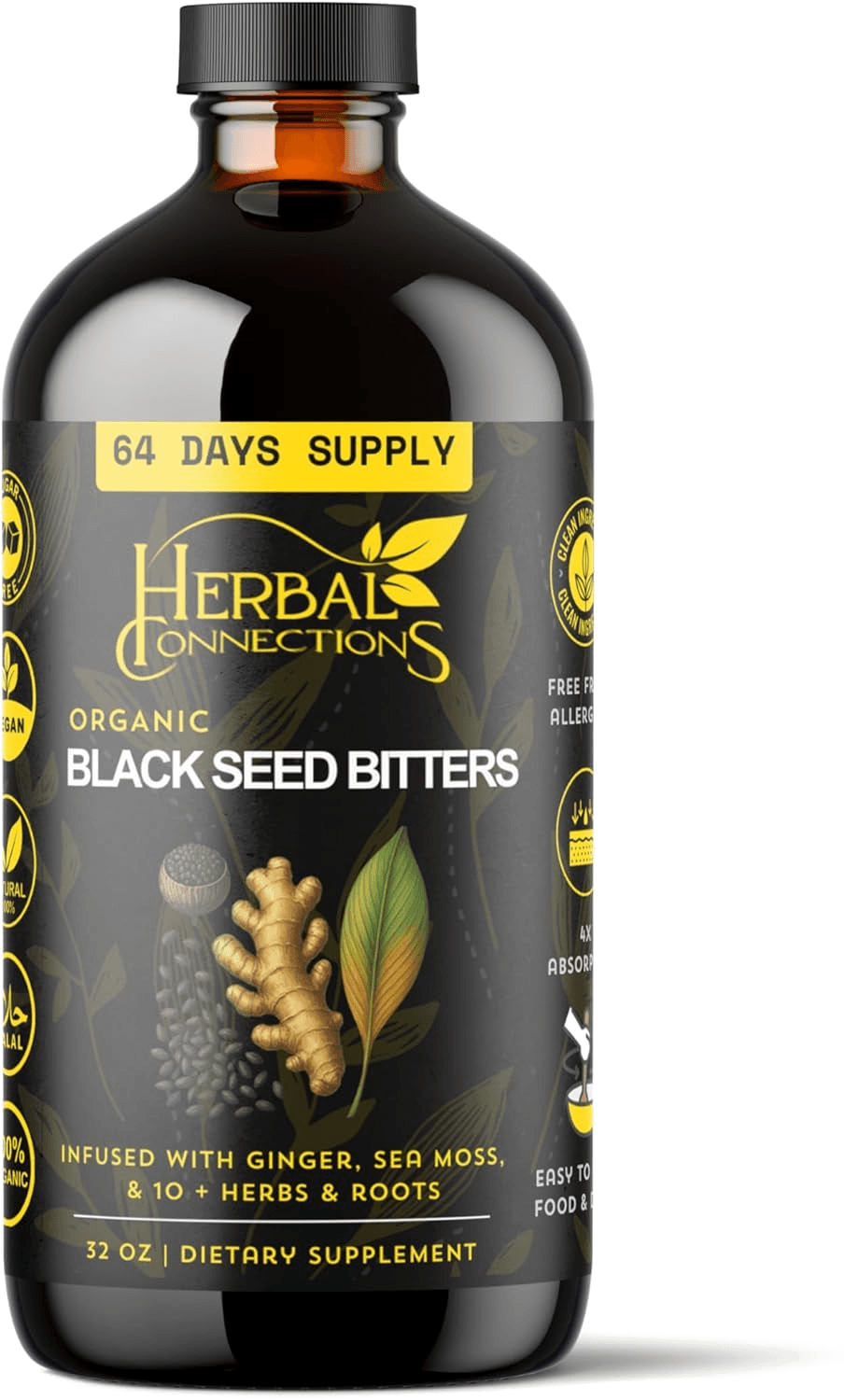
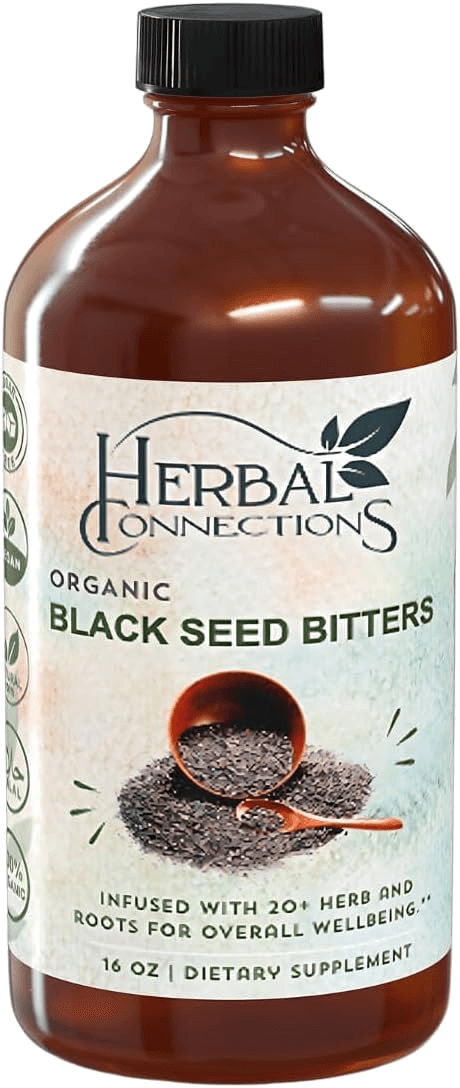
The medicinal preparation is either the whole seed, the cold-pressed oil, or — in the modern wellness format — a standardized extract delivered as a tonic or capsule. Our Black Seed Bitters is the tonic format: cold-pressed black seed oil suspended in a 15-herb water-and-vinegar base.
Thymoquinone: the lead compound
Almost all of the documented pharmacological effects of black seed trace back to thymoquinone (TQ) — a quinone compound that makes up roughly 30–50% of the volatile oil fraction of the seed. Thymoquinone has been studied for:
Anti-inflammatory action (well-supported)
Multiple clinical trials show that black seed oil reduces inflammatory markers — C-reactive protein, TNF-alpha, IL-6 — across a range of conditions. A 2021 meta-analysis pooled 25 trials and found consistent reductions of these markers in subjects taking 500–2,000 mg of black seed oil daily for 8+ weeks. This is the strongest area of evidence for black seed.
Lipid and glucose support (well-supported)
A series of trials in type 2 diabetics has shown that black seed oil supplementation modestly improves HbA1c, fasting glucose, and lipid profiles. Effects are modest — about a 0.5% reduction in HbA1c at 2 g/day over 12 weeks — but consistent across trials. Worth pairing with diet and other interventions, not a substitute for medication.
Respiratory support (moderately supported)
Black seed has shown bronchodilator effects in asthmatic patients, with small but real improvements in FEV1 and FVC. There's a particularly interesting body of literature from Iranian researchers on its effects in allergic rhinitis. If you're a seasonal allergy sufferer, this is one of the better-supported herbal interventions.
Antimicrobial action (lab-supported, clinically uncertain)
Thymoquinone has documented antibacterial, antifungal, and antiviral activity in vitro. Whether this translates to clinical infection-fighting in humans is much less clear. Reasonable to add as part of an immune-support stack; not reasonable to rely on for active infections.
Cancer claims (interesting but premature)
You'll see a lot of "black seed kills cancer cells" content online. There is real in vitro and animal-model evidence for cytotoxicity against several cancer cell lines, particularly pancreatic and breast. But clinical translation has been slow and the human evidence is preliminary. We don't make oncology claims and you should be skeptical of anyone who does.
How to take it
Three formats:
- Whole seeds — sprinkle on yogurt, salads, or naan. About 1 teaspoon daily is the traditional dose. Cheapest but you'll get inconsistent extraction.
- Cold-pressed oil — typically 500–1,000 mg in a capsule, 1–2 capsules daily. Concentrated but the taste is sharp and the burps can be intense. Take with food.
- Bitters / tonic format — cold-brewed with a base of supporting herbs in a vinegar-water carrier. This is what we make. Easier on the palate (the supporting herbs round out the sharpness) and easier to take consistently.
For all three, the dose-response curve plateaus around 2,000 mg of seed equivalent per day. More than that doesn't appear to add benefit and may cause GI discomfort. Our 32 oz Black Seed Bitters delivers approximately 1,500 mg of black seed extract per 15 ml serving — right in the effective range.
Who should be careful
- Pregnant women — black seed has uterotonic effects in animal models. Avoid.
- People on anticoagulants (warfarin, Eliquis, etc.) — black seed has mild antiplatelet activity. Talk to your doctor.
- People with low blood pressure — black seed lowers BP. Watch for symptoms.
- People on chemotherapy — the antioxidant action of black seed can interfere with some chemo mechanisms. Always coordinate with your oncologist.
Bottom line
Black seed is one of the few traditional herbs where the historical use and the modern clinical evidence are both unusually strong. It's not the miracle the hadith literature claims, and it's not the cancer cure the internet claims. It's a real, well-tolerated, anti-inflammatory adaptogen with documented benefits for metabolic and respiratory health.
If you're going to take one new herbal supplement this year, black seed has one of the strongest evidence-to-effort ratios on the shelf.
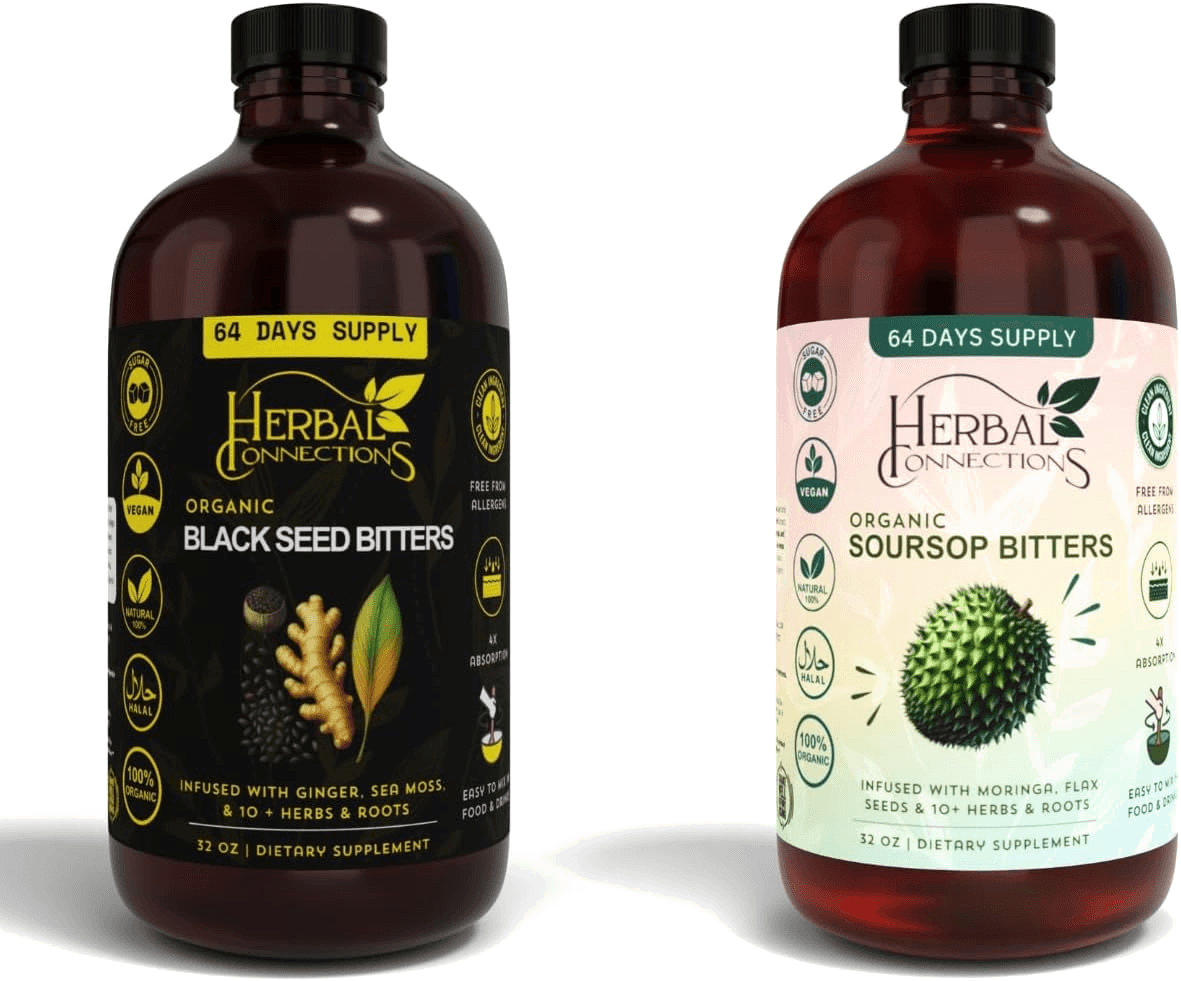
Mentioned in this guide
Shop the formulas referenced above.
About the editorial team
Our editorial team is led by a Naturopathic Doctor (ND) and a clinical herbalist with 15+ years in functional medicine. Every post is reviewed before publishing.
The information in this article is for educational purposes only. It is not medical advice and is not intended to diagnose, treat, cure, or prevent any disease. Always consult a qualified healthcare practitioner before starting a new supplement, particularly if you are pregnant, nursing, taking medication, or have a chronic medical condition.