Buyer Guide · 6 min read
Lion's Mane Showdown: Host Defense (Mycelium) vs Gaia Herbs (Fruiting Body)
Two of the most respected mushroom brands in the US use opposite approaches to Lion's Mane. Here's what each delivers — and why both are legitimate.
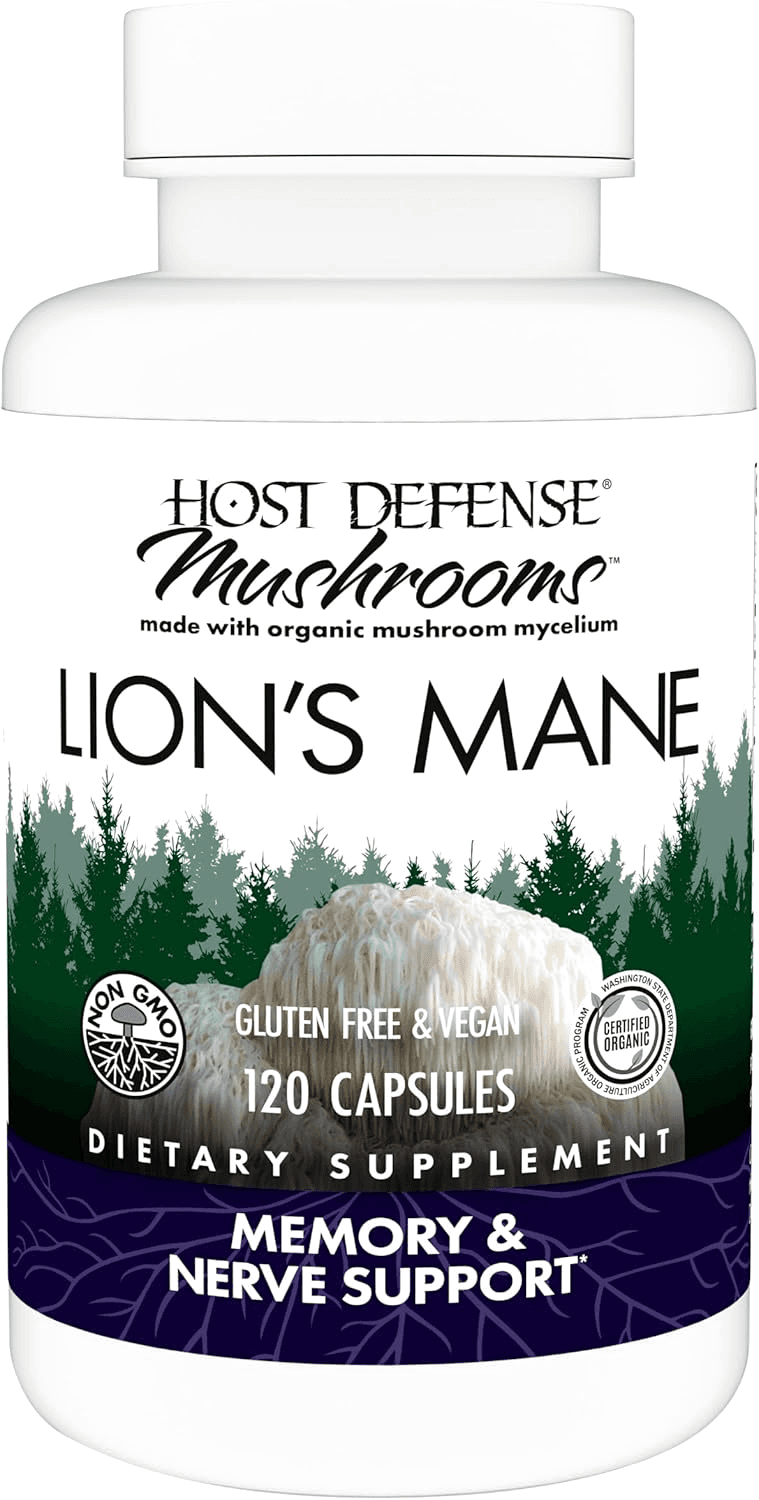
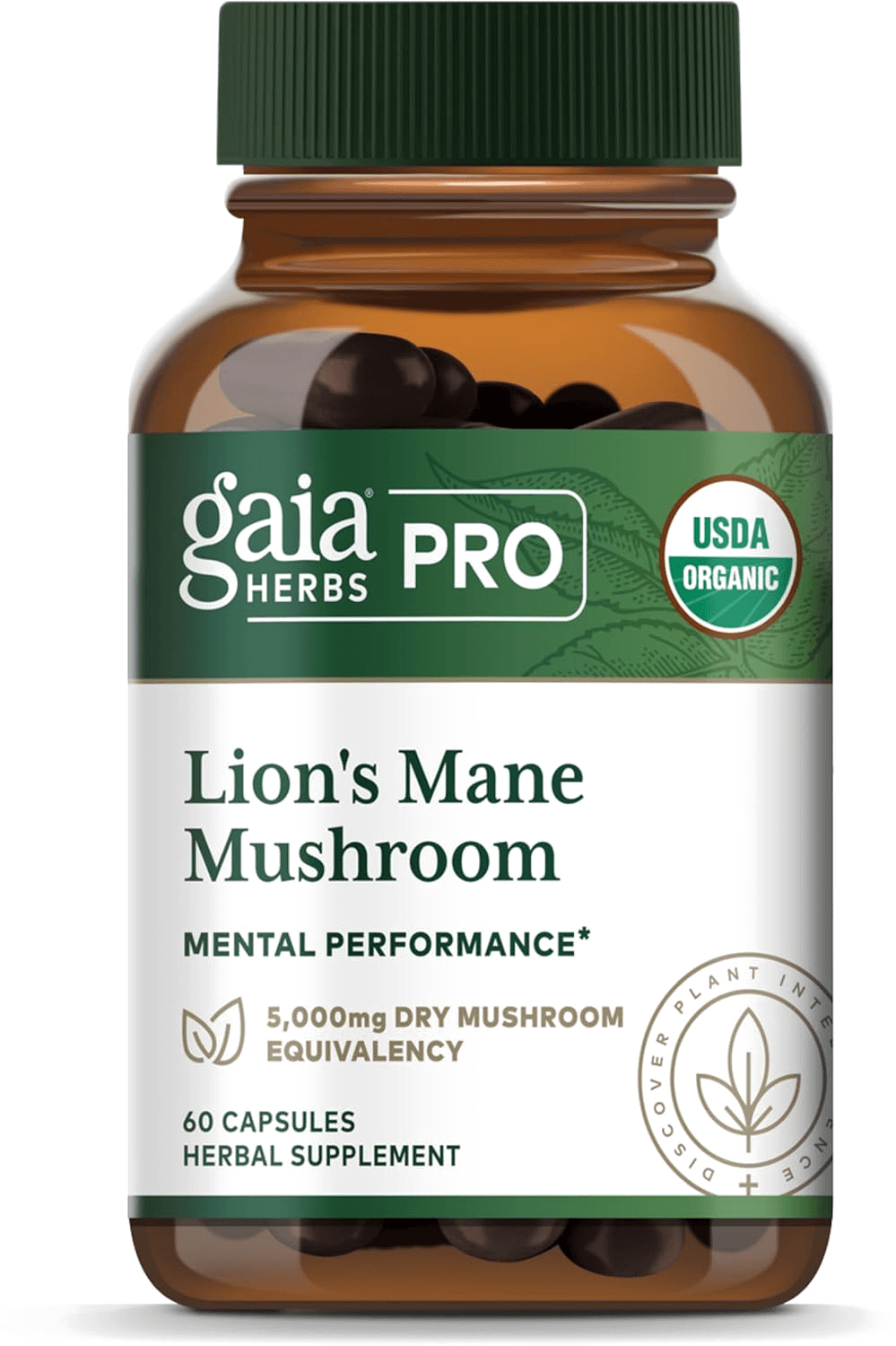
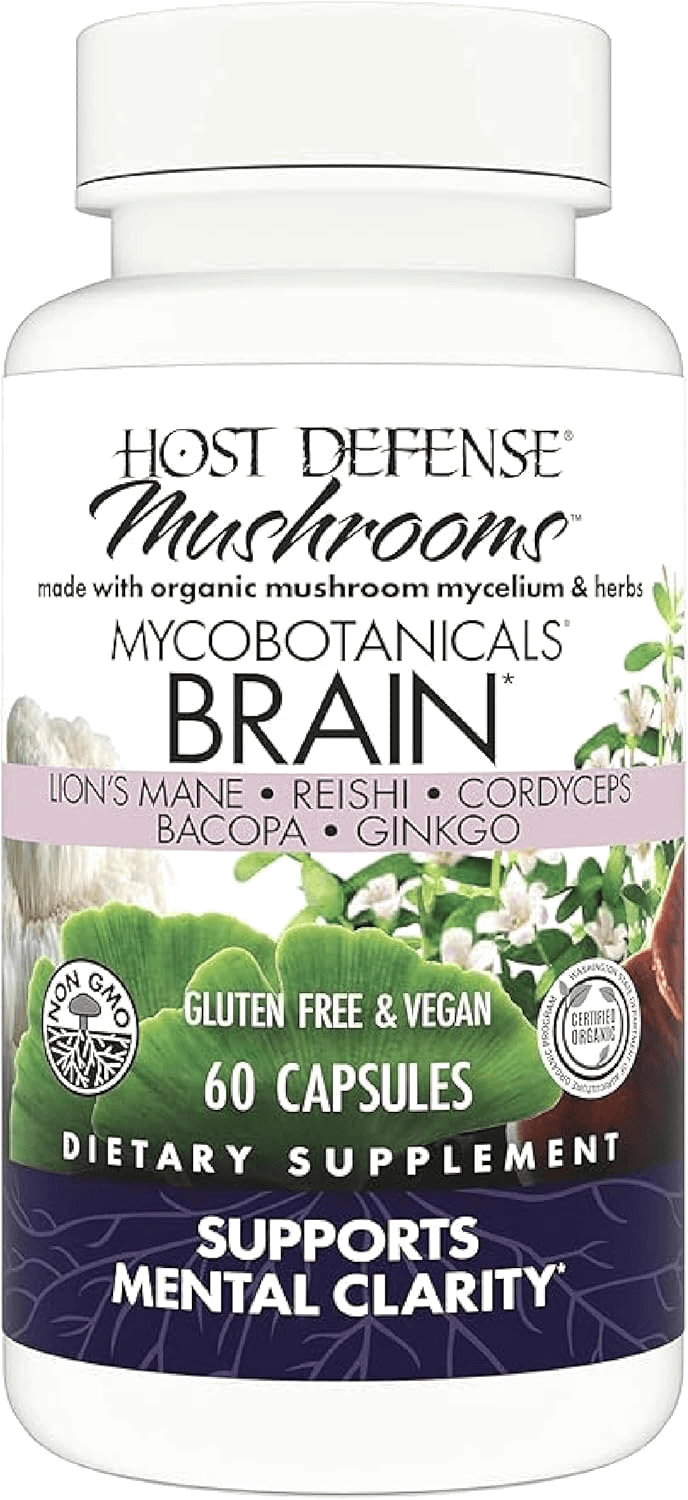
Lion's Mane (Hericium erinaceus) has become the bestselling functional mushroom in the US — driven by clinical evidence on cognition and a wave of enthusiastic Reddit testimony. We carry two of the most credible brands in the category: Host Defense (Paul Stamets' company, uses mycelium) and Gaia Herbs (uses fruiting body). They're both right — but for different reasons.
| Spec | Lion's Mane (120 ct) | Lion's Mane | MycoBotanicals Brain |
|---|---|---|---|
| Brand | Host Defense | Gaia Herbs PRO | Host Defense MycoBotanicals Brain |
| Mushroom part used | Mycelium on brown rice substrate | Fruiting body | Mycelium on brown rice |
| Primary active class | Erinacines (mycelium-specific) | Hericenones (fruiting-body-specific) | Erinacines + supporting mushrooms |
| Beta-glucan content (tested) | Yes | Yes | Yes |
| Single-species or blend | Single | Single | Lion's Mane + Reishi + Cordyceps |
| Form factor | 120 capsules | 60 capsules | 60 capsules |
| Daily dose | 2 capsules | 2 capsules | 2 capsules |
| Servings per bottle | 60 (2 months) | 30 (1 month) | 30 (1 month) |
| Price per month | ~$25 | ~$47 | ~$30 |
| Founder | Paul Stamets (mycologist) | Ric Scalzo (clinical herbalist) | Paul Stamets |
The mycelium vs fruiting body argument, briefly
A medicinal mushroom has two life stages:
- Mycelium — the underground network of root-like filaments that grows for most of the organism's life
- Fruiting body — the visible "mushroom" that emerges to produce spores
Both contain bioactive compounds. They overlap, but they're not identical:
- Mycelium is higher in erinacines (Lion's Mane-specific neuroprotective compounds), and (when grown on brown rice substrate) contains beneficial fermentation byproducts from the rice. Critics point out that some of what's in the capsule is rice, not mushroom.
- Fruiting body is higher in hericenones (also Lion's Mane-specific, also neuroprotective), and higher in total beta-glucans (the immune-modulating polysaccharides). Critics point out that it's harder to grow at scale, more expensive, and that you're often paying for water weight.
Both have clinical research supporting their use. The most cited Lion's Mane trial (Mori et al., 2009, Japan) used a fruiting-body extract — but later trials have used mycelium-on-grain preparations with similar results.
Host Defense's approach
Paul Stamets has been growing mycelium-on-grain for 40+ years. His position is that mycelium with its grain substrate delivers a different but valid pharmacology — the brown rice substrate gets enzymatically transformed during fungal colonization, and the resulting "myceliated grain" has documented immunomodulatory activity in trials Host Defense has helped fund.
The Host Defense quality control:
- Beta-glucan content is tested and published per batch
- Mycelium is grown in the US (Olympia, WA)
- Organic, non-GMO certified
- Stamets has published >50 papers on fungal pharmacology
Host Defense's standard Lion's Mane is 120 capsules for ~$50 — about $0.40 per daily serving (2 caps).
Gaia Herbs' approach
Gaia Herbs grows whole-fruiting-body Lion's Mane on their Regenerative Organic Certified farm in Brevard, NC. Their position is that the fruiting body is the part of the mushroom that traditional Chinese and Japanese medicine actually used for centuries — and that "mycelium on rice" is a 21st-century industrial convenience, not a tradition.
The Gaia Herbs PRO line is their practitioner-tier — denser extracts, more rigorous testing, slightly more expensive. The Lion's Mane PRO is 60 capsules for ~$47 — about $1.56 per daily serving (2 caps).
You're paying about 4x per serving compared to Host Defense, in exchange for fruiting body rather than mycelium-on-grain.
The honest verdict from the research
If you're optimizing for the strongest clinical evidence:
- For cognitive support, both mycelium and fruiting body have human-trial evidence. Fruiting body has the original Japanese MCI trial. Mycelium has more recent immunology and neuroinflammation work.
- For immune support, fruiting body has more beta-glucans; mycelium-on-grain has more polysaccharide diversity from the substrate.
- For value, mycelium wins easily on cost per serving.
- For traditional-use purism, fruiting body wins.
What we'd actually pick
For most people who are new to Lion's Mane and want to see if it works for them: Host Defense Lion's Mane (120 caps) at $50 for two months. Lowest barrier to a real trial.
For people who specifically want the fruiting-body preparation matching the original 2009 Japanese trial: Gaia Herbs PRO Lion's Mane.
For people who want to stack Lion's Mane with Reishi and Cordyceps in one bottle (which is what most experienced mushroom users end up doing): Host Defense MycoBotanicals Brain, which is the 3-mushroom cognitive formula.
The verdict
There is no objectively wrong answer here. Host Defense is the practical default — cheaper, longer-running quality control, Stamets' decades of research behind it. Gaia Herbs is the right pick for people who value fruiting-body sourcing or who want the Gaia PRO quality tier. Both will deliver a real Lion's Mane experience.